

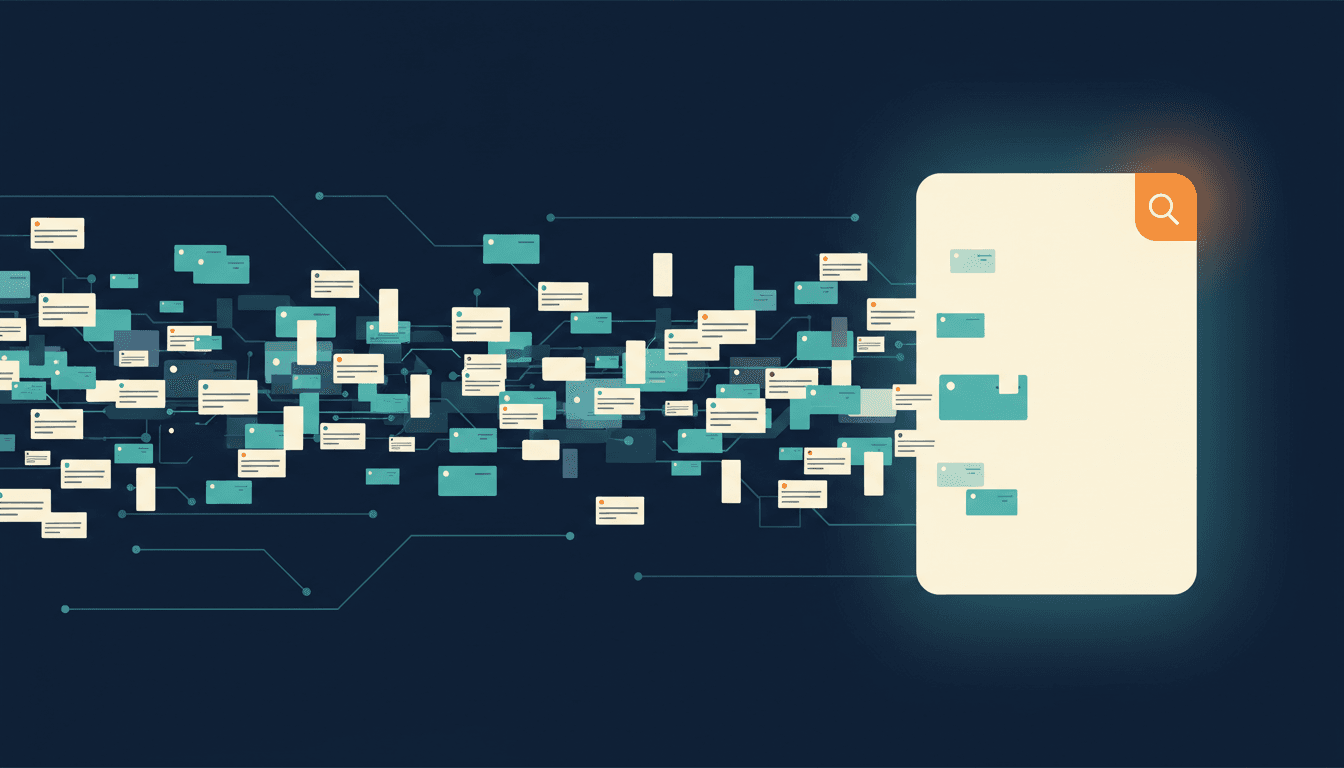
AI assistants do not browse, they retrieve
When someone asks ChatGPT or Gemini to recommend a clinic, an agency, or any service business, the assistant does not wander the web the way a person does. It runs a retrieval step: a query goes to a search index, a handful of candidate pages come back, the model reads them, and the answer is assembled from whatever those pages say, usually with citations.
That one mechanical fact explains most of what works and what does not. If your page is not in the candidate set, you do not exist for that answer. If your page is in the set but the model cannot extract a clear claim from it, you are raw material for someone else's recommendation. The businesses that get named are the ones whose pages survive both steps.
It also means classic SEO is not dead, whatever the headlines say. The retrieval step leans on conventional search indexes, so crawlability, indexation, and relevance still decide whether you make the shortlist. What has changed is the second step, because your reader is now a language model on a deadline.
What a language model needs from your page
We rebuild and audit sites for this constantly, and the pattern is stable across engines. A model skimming retrieved pages rewards a small number of things.
The quotability point is the one most sites miss. A sentence like "we are a London digital media agency that specialises in medical-travel marketing" can be quoted verbatim into an answer. A paragraph of brand storytelling about passion and journeys cannot. When we write service pages now, we write the sentence we want the AI to repeat, and then we make sure it appears early.
- A direct answer near the top, because models weight the opening of a page heavily when deciding what it is about
- One page per question, rather than one long page trying to answer twelve
- Plain factual sentences a model can lift whole, with the claim and the subject in the same sentence
- Structured data that states who the business is, what it does, and where it operates
- Consistent name, address, and contact details everywhere the business appears online
The changes we make on client sites first
When a client asks us to improve their AI visibility, the first round of work is unglamorous and almost always the same.
We fix retrieval before anything else: a working sitemap, clean indexation, and redirects that preserve every URL the engines already know. Broken plumbing silently caps everything downstream, and it is more common than anyone admits. We have audited sites whose robots file pointed at a sitemap that returned a 404, which meant search engines had no working map of the site at all.
Then we add an answer layer to the key pages: a short, direct summary at the top of each service and guide page that answers the question the page exists for. Search raters call this answering the query, AI engines treat it as the extractable core of the page, and human visitors simply read it as clarity. The same block serves all three.
Then structured data, properly. Organization and Service schema with real company details, FAQ markup where there are genuine questions, and Person markup for named authors linked to their public profiles. Schema is the one channel where you speak to the machine in its own format, without inference, and it is still rare enough to be a differentiator outside the biggest brands.
Last, the file-and-protocol layer: llms.txt for AI crawlers and, for clients who want to lead, exposing services in agent-readable form. We are honest with clients about this tier: it is the future-facing piece, not the thing that moves this quarter's numbers. The answer layer and the schema do that.
What we refuse to do, and why
There is already a cottage industry of AI search tricks: hidden instructions addressed to language models, pages stuffed with "best agency" claims in white text, and mass-produced AI articles published by the hundred. We do not do any of it, and not only for ethical reasons.
The practical problem is that these tricks attack systems that are evaluated and retrained continuously. A prompt-injection trick that works in March is a liability by June, except the content it leaves behind stays on your domain, and quality systems on both the search and AI side are explicitly trained to spot manufactured content at scale. We have seen what an unreviewed automated blog does to a domain's credibility, and the recovery costs far more than the shortcuts ever saved.
The boring truth is that AI search rewards the same underlying asset traditional search does: being a real business with verifiable details and something first-hand to say. First-hand is the operative word. Your campaign results, your sector's regulatory quirks, the questions your actual customers ask. That is the one category of content an AI cannot synthesise from elsewhere, which is precisely why engines reach for it.
How to tell whether any of it is working
Clicks undercount AI visibility, because many AI answers satisfy the user without a visit. So we track differently for this channel.
None of this needs expensive tooling to start. It needs consistency, the same questions asked the same way over time, so that movement means something. That is the same discipline as any other channel we run, which is rather the point. AI search is not magic. It is a new reader with strict tastes, and the businesses that feed it clear, verifiable, first-hand pages are the ones it learns to recommend.
- Ask the engines directly, on a schedule: the same commercial questions, across ChatGPT, Gemini, and Perplexity, recording whether the brand is named and what is said about it
- Watch branded search volume and direct traffic, which rise when AI answers introduce the brand to people who then look it up
- Tag and ask: lead forms should capture how the enquirer found you, and "I asked ChatGPT" is now a real answer worth counting